

Uncategorized
How to Make Cannabis Concentrates: An Expert Breakdown
Jan
The Allure of the Concentrate
There's a significant, sometimes dramatic shift happening in the world of cannabis, and it's all about potency and purity. Flower is timeless, of course, but the conversation has moved. It's now centered on the gleaming, amber world of concentrates. From shatter and wax to live rosin and vape cartridges, these products represent the very essence of the plant, isolated and refined. It’s a fascinating corner of the industry, full of science, artistry, and a fair bit of risk.
Maybe you’re a curious connoisseur, wondering what separates a good dab from a great one. Or perhaps you're an ambitious grower wondering how to take your harvest to the next level. Whatever your reason for searching "how to make cannabis concentrates," you've landed in the right place. Our team at Splash Brothers has spent years vetting, sourcing, and understanding these products inside and out. We’re not just a delivery service; we’re fanatics about quality. And that quality begins with understanding the process from the ground up. So, let's pull back the curtain on how these potent products are actually made.
First Things First: What Exactly Is a Concentrate?
Before we dive into the 'how,' we need to be crystal clear on the 'what.' A cannabis concentrate is exactly what it sounds like: a concentrated form of the cannabis plant’s most desirable compounds. It's a product that has been processed to strip away excess plant material, leaving behind a potent payload of cannabinoids (like THC and CBD) and terpenes (the aromatic compounds that give strains their unique smell and flavor).
Think of the cannabis flower. It's covered in tiny, glistening crystals that look like sugar. These are called trichomes. They're the microscopic factories that produce the vast majority of the plant's cannabinoids and terpenes. The entire goal of making a concentrate is to harvest these trichomes and separate them from everything else—the leaves, stems, and other vegetative matter. The result is a product that can have THC levels ranging from 60% to well over 90%, compared to the 15-30% typically found in raw flower. It’s a powerful difference.
This isn't just about getting a more intense effect. It's about purity and flavor. When you remove the plant material that combusts and creates harsh smoke, you’re left with a vapor that is cleaner and far more flavorful. A good concentrate delivers an unadulterated expression of the strain's terpene profile. It's the difference between listening to a muffled recording and hearing a live orchestra. That's the appeal.
The Two Roads of Extraction: Solvent vs. Solventless
Every method for making cannabis concentrates falls into one of two major categories: solvent-based extraction or solventless extraction. This is the most critical distinction to understand, as it dictates the equipment, the safety risks, and the final characteristics of the product.
Solventless extraction uses mechanical and physical forces—like pressure, temperature changes, and agitation—to separate the trichomes from the plant. It's often considered the more 'natural' or 'artisanal' path. Think of it as physically knocking the trichomes off the plant and collecting them. Methods like making kief, bubble hash, and rosin fall under this umbrella.
Solvent-based extraction, on the other hand, uses a chemical solvent (like butane, propane, CO2, or ethanol) to dissolve the trichomes away from the plant material. The solution is then processed to remove the solvent, leaving the concentrated cannabinoids and terpenes behind. This is the method used to create products like BHO (shatter, wax, crumble) and the oil found in most vape cartridges. It's highly efficient but comes with a formidable set of challenges and dangers.
We’ll explore both. But we can't stress this enough: while some solventless methods can be explored safely by hobbyists, solvent-based extractions are the exclusive domain of trained professionals with licensed, purpose-built laboratories. The risks are simply too high for a home setup. Seriously.
The Safer Path: Exploring Solventless Methods
For anyone interested in the hands-on process, the solventless world is your playground. The methods are grounded in ancient techniques, now refined with modern technology. The best part? The risk of blowing something up is zero. The biggest mess you'll likely make involves water and ice.
Dry Sifting (Making Kief)
This is the simplest extraction method on earth. It’s been done for centuries. Kief is simply the collection of unpressed trichome heads. If you have a three-chamber grinder, the fine powder that collects in the bottom chamber is kief.
To do it on a larger scale, you use a series of micron screens. You gently tumble or rub dried cannabis flower over the screen, and the brittle trichome heads break off and fall through the mesh. Finer screens are used to further refine the kief, separating the trichome heads from smaller bits of plant material. High-quality dry sift can be incredibly potent and flavorful, and it can be pressed into traditional hash or used to top a bowl.
Ice Water Extraction (Bubble Hash)
This is where things get a bit more involved, but the results are spectacular. Ice water extraction uses freezing cold water and agitation to make the trichomes brittle and snap them off the plant material. Because trichomes are not water-soluble, they can be easily filtered out.
Here’s the process in a nutshell:
- Combine: Cannabis flower (or trim) is combined with ice and water in a vessel, often a specialized washing machine or a clean bucket.
- Agitate: The mixture is stirred gently for several minutes. The ice-cold temperature makes the trichomes fragile, and the agitation knocks them loose.
- Filter: The resulting trichome-rich water is then poured through a series of specialized filter bags, often called 'bubble bags.' These bags have different micron screen sizes at the bottom, ranging from coarse (around 220 microns) to incredibly fine (as low as 25 microns).
- Collect: Each bag catches a different grade of trichome heads. The highest quality, often called 'full melt,' is typically found in the 73-120 micron range. This material is so pure it will fully melt and vaporize when heated, leaving no residue.
After collection, the hash is carefully dried. Our experience shows that improper drying is the number one mistake beginners make, leading to mold. It requires a cool, dark, and controlled environment. The final product is bubble hash, a top-tier solventless concentrate.
Rosin Pressing: The Power of Heat and Pressure
This is the newest and arguably most exciting solventless technique. Rosin is made by simply applying a specific amount of heat and immense pressure to cannabis flower, kief, or bubble hash. That’s it. No solvents, no water. Just force.
Specialized rosin presses use two heated plates that press the starting material with several tons of force. The heat liquefies the cannabinoids and terpenes within the trichome heads, and the pressure squeezes the resulting oily resin out. This golden sap is then collected from parchment paper. The beauty of rosin is its immediacy and purity. You are essentially squeezing the live essence right out of the plant material.
Pressing high-quality bubble hash (a process that yields 'live rosin') produces one of the most prized concentrates on the market. It's a completely solvent-free product with a terpene profile that is second to none. We've found that true connoisseurs are increasingly seeking out live rosin for its unparalleled flavor.
The Professional's Domain: A Look at Solvent-Based Methods
Now we venture into territory that is absolutely not for DIY experimentation. We're explaining this for educational purposes only. These methods require closed-loop extraction systems, precise atmospheric controls, and a deep understanding of chemical safety protocols to prevent catastrophic accidents.
Butane Hash Oil (BHO) and Propane Hash Oil (PHO)
This is the method behind crowd favorites like shatter, wax, budder, and crumble. It uses a hydrocarbon solvent—most commonly butane—to strip the cannabinoids and terpenes from the plant. In a professional lab, this happens in a sealed, 'closed-loop' system.
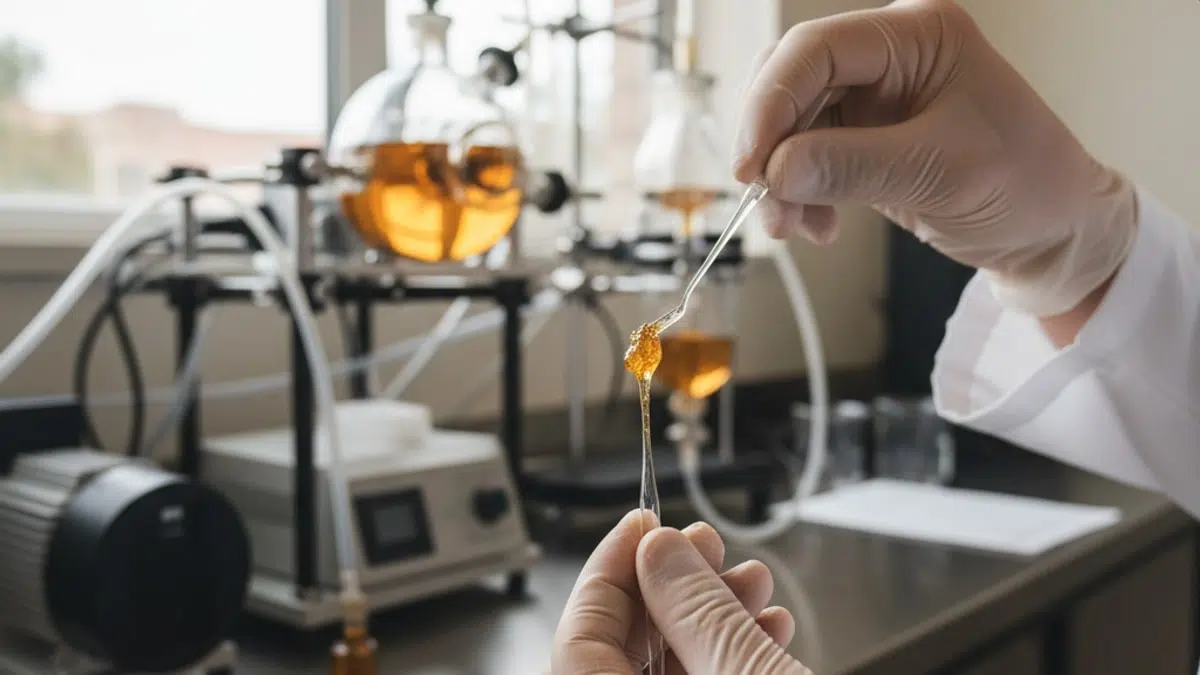
Pressurized liquid butane is passed over the plant material in a column. The butane acts as a solvent, dissolving the desirable compounds. The resulting butane-and-cannabinoid solution is then collected in a separate chamber. The next, and most critical, step is purging. The solution is gently heated under a vacuum to boil off the butane, which is then recovered by the system to be used again. This purging process must be done perfectly to ensure no residual solvent is left in the final product. The consistency of the BHO (shatter vs. wax) is determined by factors like the starting material and post-extraction agitation.
Why is this so dangerous for amateurs? Butane is heavier than air and extremely flammable. An open-air 'blast' in a garage or basement can fill the room with invisible, explosive gas, which can be ignited by something as simple as a pilot light or a static spark.
Supercritical CO2 Extraction
CO2 extraction is a much cleaner and safer—but far more expensive—method. It uses carbon dioxide under immense pressure and specific temperatures to bring it to a 'supercritical' state, where it behaves as both a liquid and a gas. In this state, CO2 is an incredibly effective solvent for pulling out cannabinoids and terpenes.
After the extraction, the pressure is released, and the CO2 simply reverts to its gaseous state and evaporates completely, leaving behind a pure, solvent-free cannabis oil. This is a huge advantage. There's no risk of residual chemical solvents. CO2 oil is the primary ingredient in many vape cartridges and edibles because its consistency can be easily controlled. The downside? The equipment looks like it belongs on a submarine and costs tens, if not hundreds, of thousands of dollars.
Ethanol Extraction
Ethanol is another popular solvent, especially for large-scale operations. It's very effective at stripping cannabinoids, but it has a downside: its polar nature means it also tends to pull unwanted compounds like chlorophyll and plant waxes along with the good stuff. This often requires extra post-processing steps like winterization (freezing the solution to separate out fats and waxes) to refine the final oil. Purging ethanol can also be trickier than purging butane. It's a common method for creating distillates and the base oil for many infused products.
Extraction Method Comparison
To make sense of it all, here's a simple breakdown our team put together to compare the most common methods:
| Method | Type | Safety Risk (DIY) | Equipment Cost | Typical Yield | Terpene Preservation |
|---|---|---|---|---|---|
| Dry Sift | Solventless | Very Low | Low | 5-15% | Good |
| Ice Water Hash | Solventless | Very Low | Low-Medium | 5-20% | Very Good |
| Rosin Press | Solventless | Low | Medium-High | 10-25% | Excellent |
| BHO/PHO | Solvent-Based | Extremely High | High (Professional) | 15-30% | Very Good |
| CO2 Extraction | Solvent-Based | High (Industrial) | Very High | 10-25% | Good to Very Good |
| Ethanol | Solvent-Based | High | High (Professional) | 10-25% | Moderate |
The Final Step: It's Not Over 'Til It's Purged and Cured
Making a great concentrate doesn't end when the initial extraction is done. Post-processing is where good extracts become great. For solvent-based extracts, this means a meticulous purge in a vacuum oven to ensure every last part-per-million of residual solvent is removed. A poorly purged product is not only harsh but also unsafe to consume.
For solventless concentrates like rosin, the post-processing is more of an art. It involves 'curing,' where the fresh rosin is stored in sealed jars and sometimes subjected to gentle heat changes. This can transform the consistency from a glassy sap into a creamy, opaque budder, often enhancing the aroma and flavor as terpenes mature. It's a step that separates the masters from the apprentices.
Why Trusting Professionals Is the Smartest Move
As you can see, learning how to make cannabis concentrates is a sprawling, complex endeavor. While the curiosity is understandable, the reality is that producing a clean, safe, and potent product requires expertise, precision equipment, and an unwavering commitment to safety. The 'garbage in, garbage out' rule is absolute here; it all starts with impeccably grown cannabis, which is then handled in a sterile environment by trained technicians.
This is why services like ours exist. We've done the hard work for you. Our team at Splash Brothers navigates this complex landscape to source only the best, lab-tested products from expert producers. You don't have to worry about residual solvents, improper purging, or inconsistent potency. You get the peace of mind that comes from knowing your product is clean, safe, and effective. Every single time.
Instead of turning your kitchen into a potential hazard zone, you can have world-class concentrates delivered right to your door. It’s about celebrating the artistry and science of extraction without any of the risk or hassle. Ready to see what the experts can do? Get Started Today and explore our curated selection of premium concentrates.
We believe that understanding the process deepens your appreciation for the final product. It's a world of incredible nuance and craft. But when it comes to consumption, safety and quality are non-negotiable. Leave the extraction to the pros, and let us handle the delivery. You can focus on what truly matters: enjoying the pinnacle of what the cannabis plant has to offer.
Frequently Asked Questions
What’s the main difference between live resin and live rosin?
▼
The key difference is solvents. Live rosin is a solventless concentrate made by pressing ice water hash that was created from fresh-frozen cannabis. Live resin is a solvent-based extract, typically BHO, also made from fresh-frozen plants to preserve terpenes.
Is it safe to make BHO at home?
▼
Absolutely not. We can’t state this strongly enough. Using butane for extraction in a non-professional, non-ventilated space is incredibly dangerous and can lead to explosions and severe injury. This should only be performed by licensed professionals in a lab with a closed-loop system.
Why is some rosin dark while other rosin is almost white?
▼
The color of rosin is determined by several factors, including the age and quality of the starting material, the temperature it was pressed at, and the micron size of the hash being pressed. Lighter colors usually indicate fresher material and lower pressing temperatures.
What does ‘purging’ a concentrate mean?
▼
Purging is the critical final step for solvent-based extracts like BHO or PHO. It involves placing the extract in a vacuum oven to remove any residual solvents, ensuring the final product is clean and safe for consumption.
How should I store my cannabis concentrates?
▼
To preserve terpenes and potency, concentrates should be stored in an airtight container (preferably glass or silicone) in a cool, dark place. For long-term storage, the refrigerator is a great option for maintaining freshness.
What is ‘full melt’ hash?
▼
‘Full melt’ is a term for the highest grade of bubble hash. It’s so pure, consisting of almost nothing but trichome heads, that it will melt and vaporize completely when dabbed, leaving behind no plant residue.
Can you eat cannabis concentrates?
▼
Yes, but only if they’ve been decarboxylated (heated) to activate the THC. Most concentrates sold for dabbing are not decarbed, but oils used in edibles and tinctures are. Eating raw, unactivated concentrate will have little to no effect.
What are terpenes and why do they matter in concentrates?
▼
Terpenes are the aromatic oils that give different cannabis strains their distinct smells and flavors, from citrusy to piney. In concentrates, they are crucial for providing a rich flavor profile and contributing to the overall entourage effect of the product.
Is a higher THC percentage always better?
▼
Not necessarily. While high THC indicates potency, the overall experience is shaped by the full spectrum of cannabinoids and terpenes. A 75% THC concentrate with a rich terpene profile can often provide a more enjoyable and nuanced experience than a 95% THC distillate with no terpenes.
What is cannabis distillate?
▼
Distillate is a highly refined cannabis oil that has been stripped of virtually all other compounds, including terpenes, leaving behind an almost pure cannabinoid (like THC or CBD). It’s very potent but lacks flavor, and is often used as a base for edibles and vape cartridges where terpenes are added back in.
Why would someone choose a solventless concentrate over a solvent-based one?
▼
Many users prefer solventless concentrates like rosin for their purity and ‘natural’ production process. They believe it offers a cleaner flavor profile and peace of mind, as there is zero possibility of residual chemical solvents being present.
What does the term ‘micron’ mean in hash making?
▼
A micron is a unit of measurement equal to one-millionth of a meter. In hash making, it refers to the size of the pores in the filter screens used to separate different sizes of trichome heads from the plant material.